Hollins, Virginia · Project planning
Paver Patio Repair and Releveling in Hollins, VA
If a Hollins patio has started to dip, the important part of a repair is understanding the movement.
Published by Hollins Hardscape Project Guide ·
If a Hollins patio has started to dip, the important part of a repair is understanding the movement. A surface can be lifted and reset in some situations, but a recurring wet area or unstable transition may need a wider assessment before new paving goes down.
What will happen at the house-side edge after the proposed paving levels are corrected?
Follow the low area toward the house
Show the patio, back-door landing and adjacent ground in one set of photos. Note whether the dip is isolated or forms part of a route that carries water toward the building. Record downspout outlets and any new change in nearby soil. Do not assume every depression is ordinary paving settlement; unexpected or continuing ground movement needs professional investigation.
Ask what releveling includes
The proposal should identify the area being lifted, the intended finished levels and how the repaired paving will connect to unchanged sections. Ask what happens if the exposed base differs from the assumptions. Identify broken units and availability of replacement materials before agreeing on a seamless visual match.
Preserve the door transition
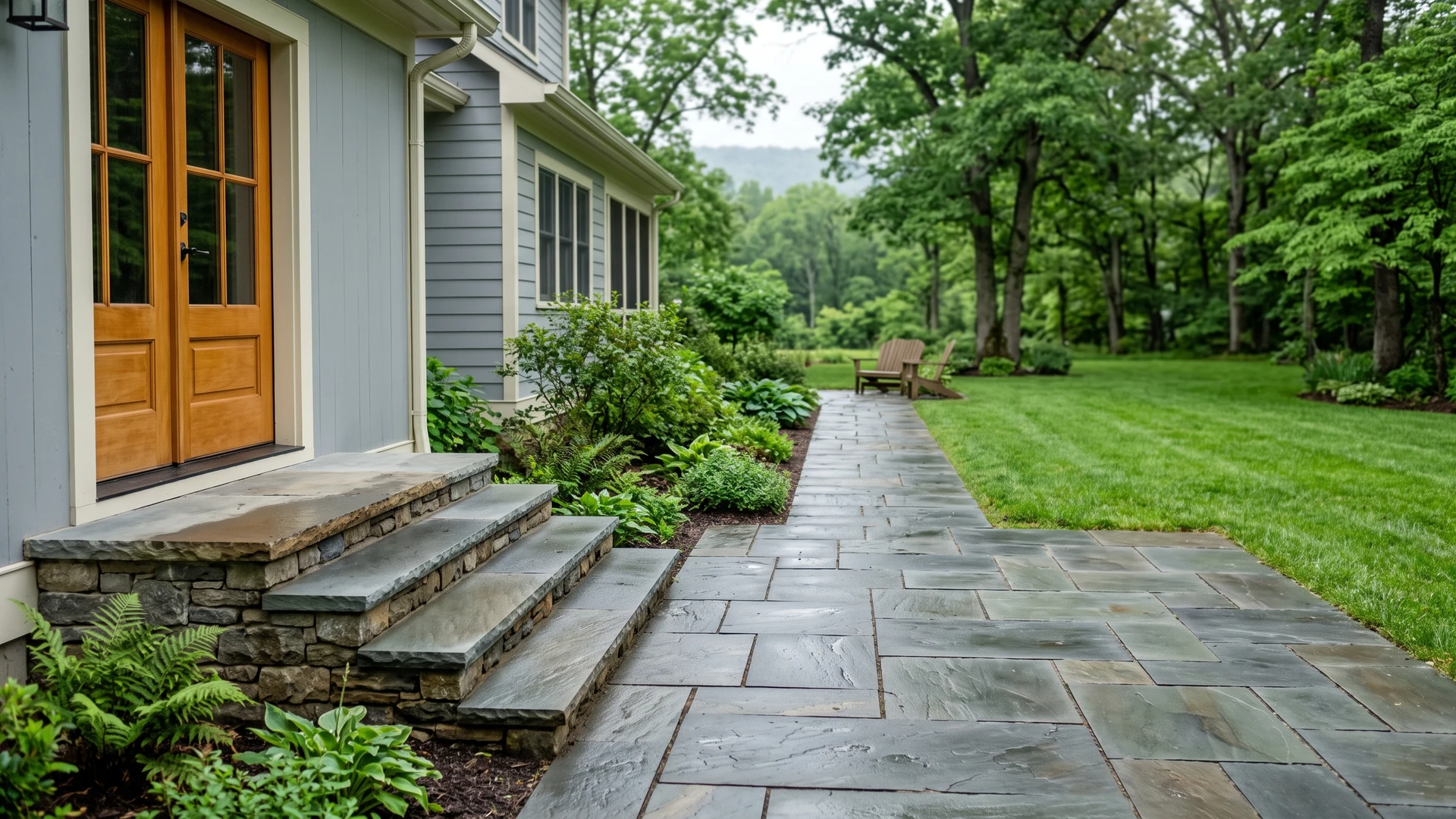
A repair should not raise paving to conceal a problem at the threshold. Photograph the step and landing from the side and explain where water collects. Door clearance, drainage and the walking route should be considered together. Use the existing Hollins ground-check and door-transition guides to prepare that discussion.
Trace the failure to its edge
Consider a low patch next to a landing that stays dry while the outer patio holds water. Those observations help separate a localized repair from a redesign of the whole door-to-yard transition.
This diagnostic sequence only organizes observations; it does not identify the cause without an on-site assessment.
Document Hollins patio movement
- Wide photographs of the whole work area, the route to the house and construction access.
- Approximate dimensions, the features you want to retain and the changes that matter most.
- Photos after rain, plus notes on when any movement, puddling or damage first appeared.
- A clear list of first-stage requirements and optional later work.
Ask for a written scope that separates preparation, installation, disposal, drainage and restoration. Identify selections that remain open and how a change is approved. A lower total is only a useful comparison when you understand the work included.
Scope a stable reset
Start with the Paver Patio Installation in Hollins, VA: Costs & Base Prep guide, then prepare a project request. This is an independent request service, not a local contractor or office. A potential provider is identified before you approve sharing your details.
Use the printable project worksheet to organize the conversation. Requirements depend on the actual scope and parcel, not the town written in a mailing address.
Look beyond the pavers that moved
Outline the affected area and continue the inspection to the nearest edge, wall, drain and downspout. On a Hollins lot, clay-rich soil, a slope or concentrated roof water can influence the base, but none should be assumed from the mailing address alone. Photograph the surface after rain and note whether movement is isolated, follows a trench-like line or repeats along the downhill edge.
Check whether the border remains firm and whether joint loss is concentrated in one direction. Do not pry up units for an informal inspection; disturbing the surface can make the repair boundary harder to evaluate.
Ask what will happen beneath the reset area
A repair description should cover removal, salvage, excavation if needed, base correction, bedding, compaction, edge restraint and joint refill. Ask how the final slope will move water and how the reset field will meet doors, steps and fixed structures. When matching replacements are limited, agree on a source area or intentional pattern change before work begins.
Tree shade and roots deserve separate discussion. Cutting roots can harm a tree, while building over active roots may lead to renewed movement. A qualified tree professional may be appropriate when major roots and paving conflict.
Connect repair evidence to the site plan
Use the Hollins patio service guide for assembly questions and the near-house drainage article when water moves toward the foundation. The ground-check guide explains why site observations matter before choosing a remedy. If a wall holds the patio edge, add the retaining-wall scope. Start at the Hollins home page to request a coordinated review.
- Measure the affected field and the complete patio.
- Take repeat photos from fixed points after rain.
- Identify edges, walls, drains, utilities and roots.
- Require the repair boundary and restoration limits in writing.
Before the Hollins site visit
Leave the affected area visible and avoid filling depressions with loose sand before it is photographed. Gather any installation invoice, product name or earlier repair record. If the patio changed after utility, drainage or landscape work, write down the approximate date. Those details help separate the history of the surface from assumptions based only on its current appearance, and they give the provider a clearer basis for defining exploratory work.
Related local reading
- Back Door to Patio: Landings and Steps in Hollins, VA
- Patio Sloping Toward the House in Hollins, VA | Causes
- What Affects Hardscape Cost in Hollins, VA | Factors
- Hollins Hardscape Permits | Roanoke County Rules Checked
Sources and further checks
Before excavation, review Virginia 811 homeowner guidance, including its explanation of private lines. Local approval details remain in the linked jurisdiction guides; confirm them with the responsible office for your property.
Prepare a project request
Bring your photos, rough dimensions and priorities. Explain what you want to change and where the property is located.
Prepare a project request Call (540) 900-1551